Commercial towing support
Heavy-duty towing for large vehicles and difficult jobs.
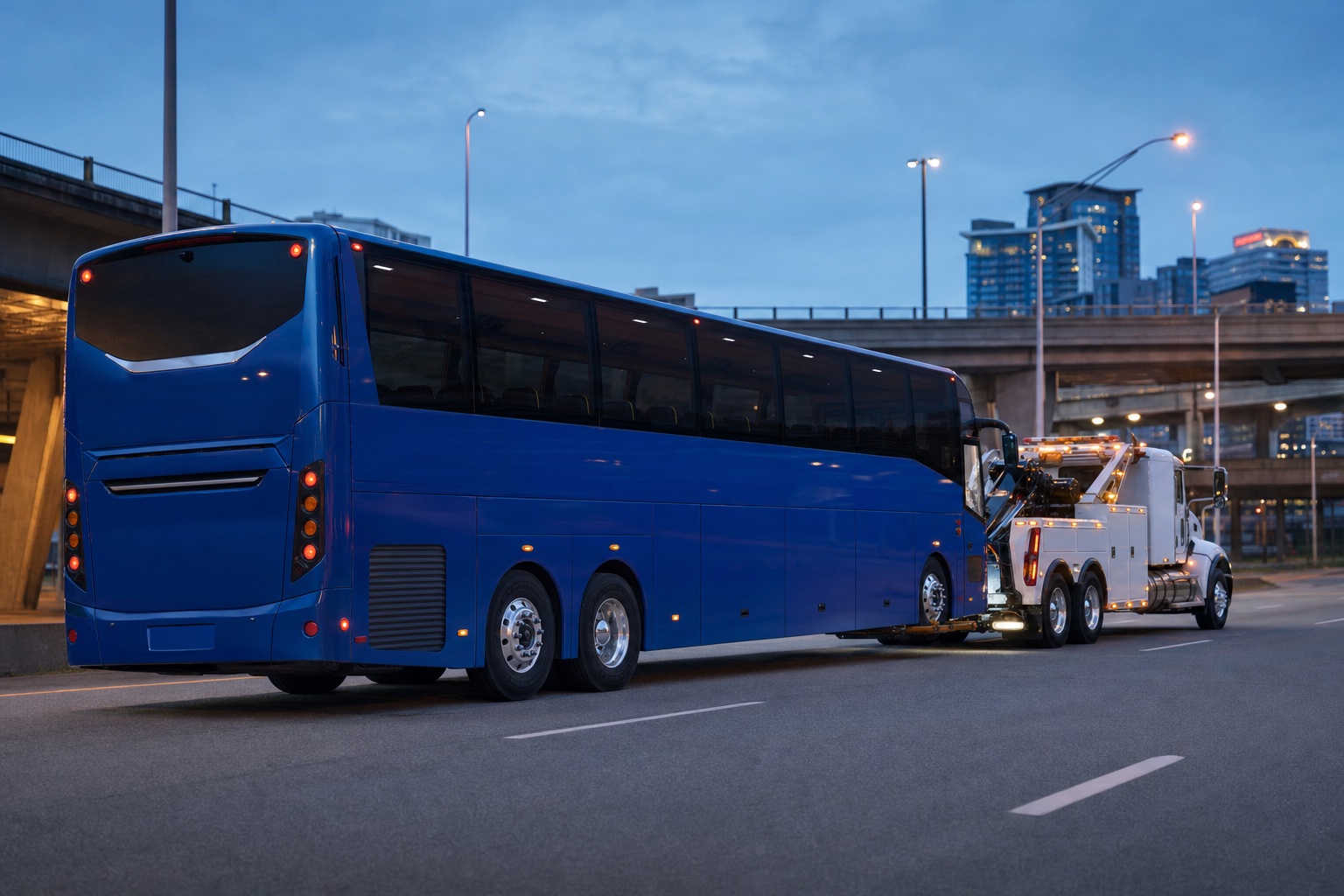
When a semi, bus, RV, vocational truck, or loaded combination is down, the towing plan needs to reflect the unit—not just the location.
Submit the vehicle configuration, estimated weight, load status, driveline or wheel condition, road position, and destination. Those details help determine whether the request calls for an underlift, heavy wrecker, landoll, lowboy, tractor swap, or another solution.
Typical units
Commercial vehicles that may need heavy towing.
Highway & fleet
- Semi tractors
- Tractor-trailers
- Box trucks
- Delivery and fleet vehicles
Passenger & specialty
- Motor coaches
- School and transit buses
- Class A and large RVs
- Specialty commercial units
Vocational & equipment
- Dump and refuse trucks
- Utility and service trucks
- Construction equipment
- Agricultural machinery
Request checklist
Send the details that affect equipment selection.
- Truck and trailer configuration
- Loaded or empty status
- Estimated gross vehicle weight
- Mechanical damage or locked wheels
- Road, shoulder, grade, and access conditions
- Pickup and destination information
Heavy towing questions
What drivers and dispatchers ask.
Does a loaded trailer change the towing plan?
Yes. Cargo type, estimated gross weight, trailer configuration, axle condition, and destination can all affect equipment selection and whether a separate tractor or trailer solution is needed.
Can a heavy wrecker tow an RV or bus?
Many large RVs, buses, and motor coaches require heavy-duty equipment. Include overall length, height, axle count, drivetrain condition, and access details with the request.
Can I choose the destination?
Include the requested shop, terminal, dealer, or safe location. Distance, receiving hours, access, and equipment availability may affect the final plan.
Need heavy towing support?
Send the vehicle, location, and job details and our Towing Company will begin a dispatch request.